Buyers moving to Southern California often end up at the same crossroads while weighing the pros and cons of living in Irvine, CA: the dense, layered neighborhoods of Los Angeles on one side, and the master-planned structure of Irvine on the other. Irvine sits in central Orange County, about five to eight miles from the Pacific coast, built largely on the historic Irvine Ranch between the Santa Ana Mountains and the San Joaquin Hills. It's a deliberate city in a way that Los Angeles simply isn't.
What it comes down to is how you want to live - and what your budget can actually get you. As of 2026, neither market is cheap. But they deliver very different daily experiences, and the gap isn't just about price. Inventory type, property taxes, and commute reality all look different depending on which side of the county line you land on.
Comparing Home Prices and Local Taxes
The financial picture here goes well beyond the purchase price. As of mid-2026, the median sale price in Irvine is approximately $1.54 million - down roughly 1.8% year-over-year, which tells you the local market has cooled slightly from its highs. Los Angeles prices swing dramatically by neighborhood, whereas Irvine holds a relatively consistent luxury baseline across its master-planned villages. That consistency is part of the appeal, but it also means there's less room to find a hidden deal. Property taxes and association fees layer on top of that purchase price quickly, and in Orange County those carrying costs deserve a hard look before you commit to a number.
Current Median Sale Prices
Irvine currently has about 4.6 months of housing supply, with 744 homes available. During a recent one-month tracking period, 161 homes sold, with a median of 48 days on market - enough time to view a few properties and write a thoughtful offer without panicking. Homes are selling at about 98.1% of list price, which means sellers are generally pricing accurately. Still, roughly 21.7% of Irvine homes sell above asking, so don't assume you'll always have the luxury of negotiating down.
Property Tax Rates by ZIP Code
Irvine's average effective property tax rate runs around 1.38%, a touch above Orange County's 1.28% average. For the typical Irvine homeowner, that works out to about $10,264 annually in property taxes.
Your actual bill depends on where you buy. Rates range from roughly 1.1% in the 92617 ZIP code up to 1.71% in 92618. Work those ZIP-specific figures into your monthly payment math before you lock in a budget.
Housing Inventory and Property Layouts
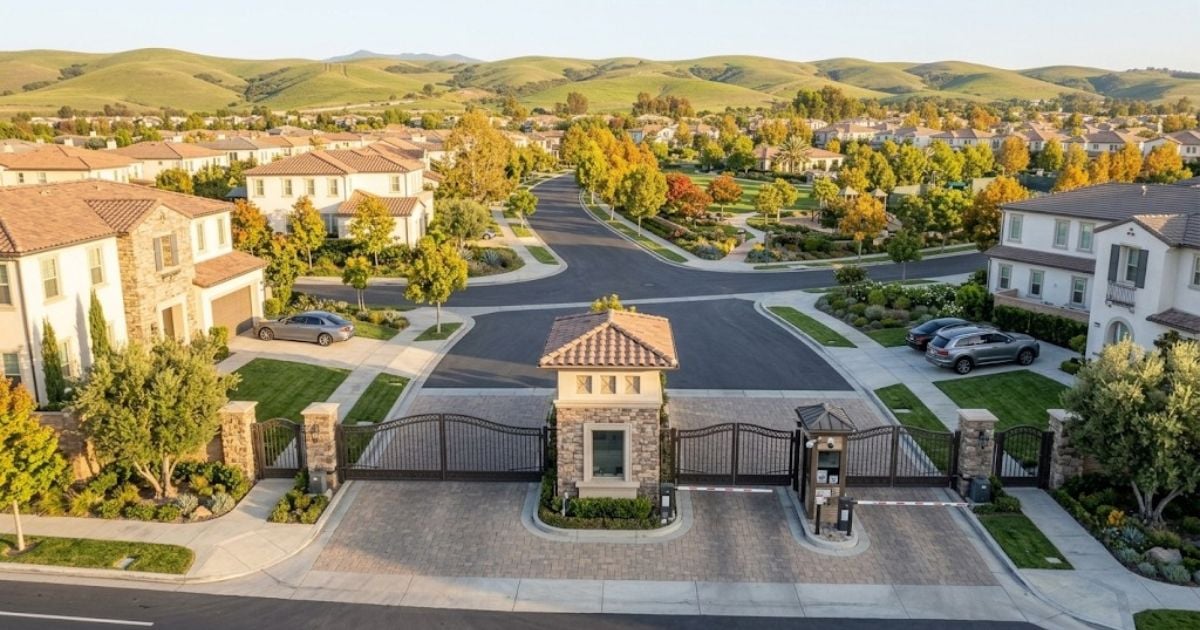
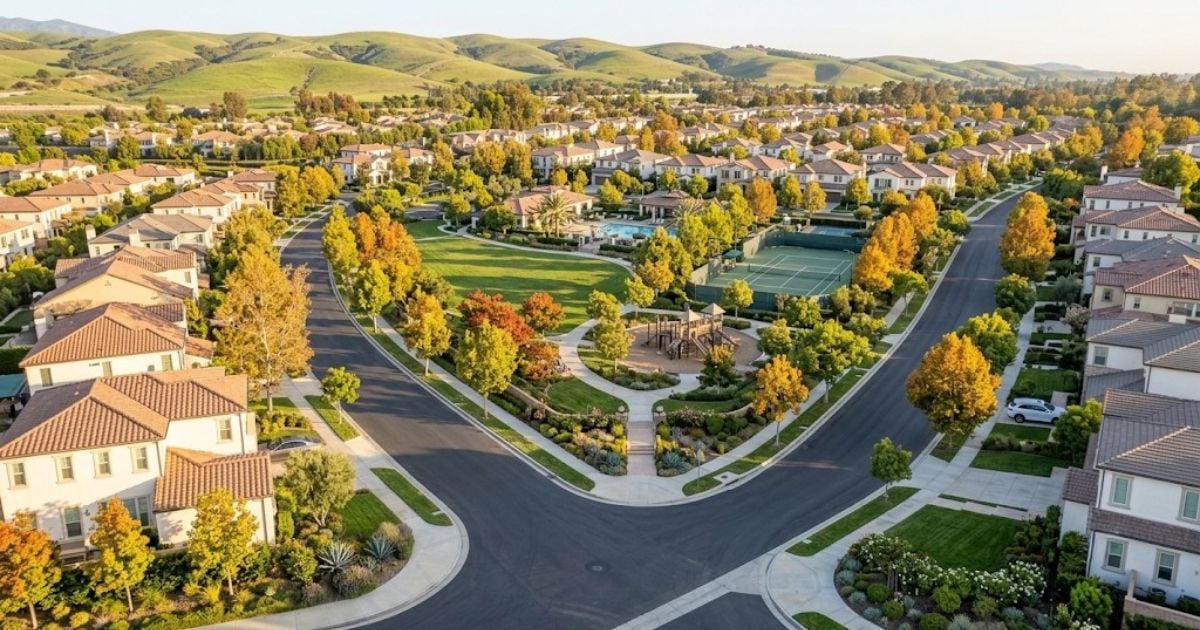
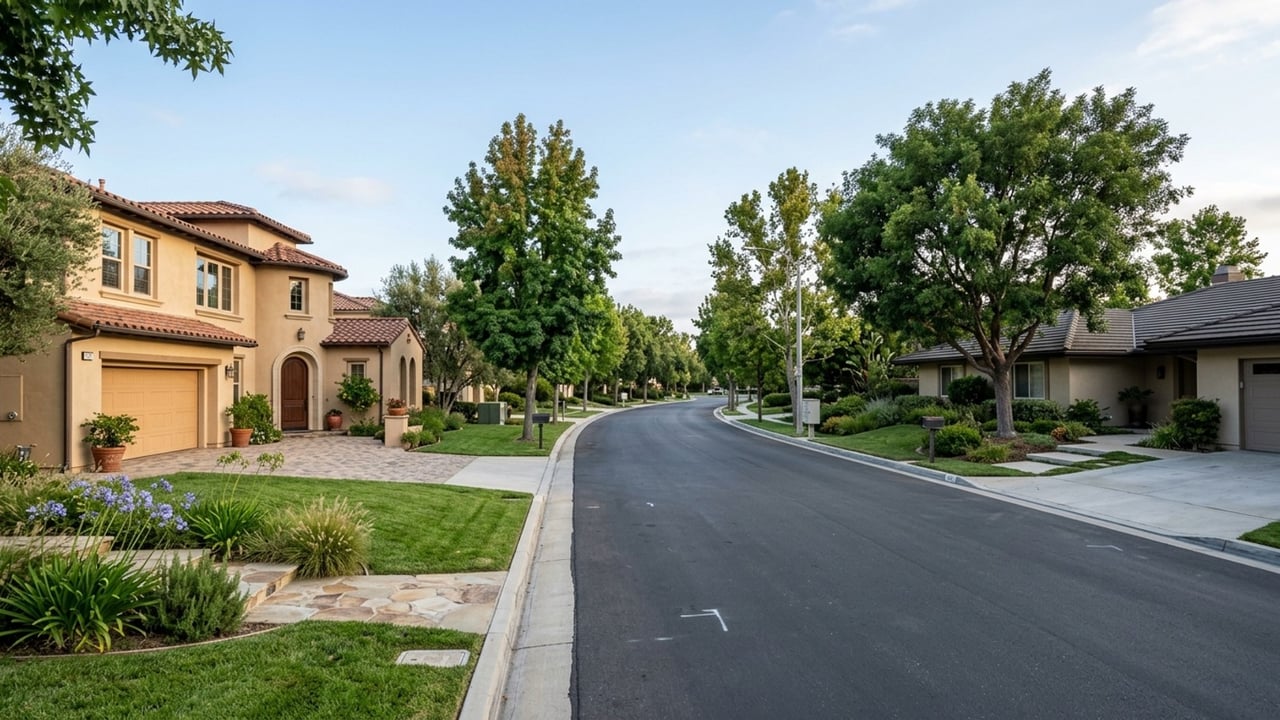
Los Angeles carries a century of organic architectural evolution - streetscapes that sprawl and contradict themselves block by block. Irvine is the opposite. Its master-planned communities follow specific design guidelines, and that intentional structure shapes everything from how traffic flows to what your neighbor's house looks like.
Buyers shopping in Irvine will mostly choose between attached condominiums, townhomes, and detached single-family properties within these structured associations. Neighborhoods like Woodbridge, Tustin Ranch, and Turtle Rock are representative of that village framework.
Common Architectural Designs
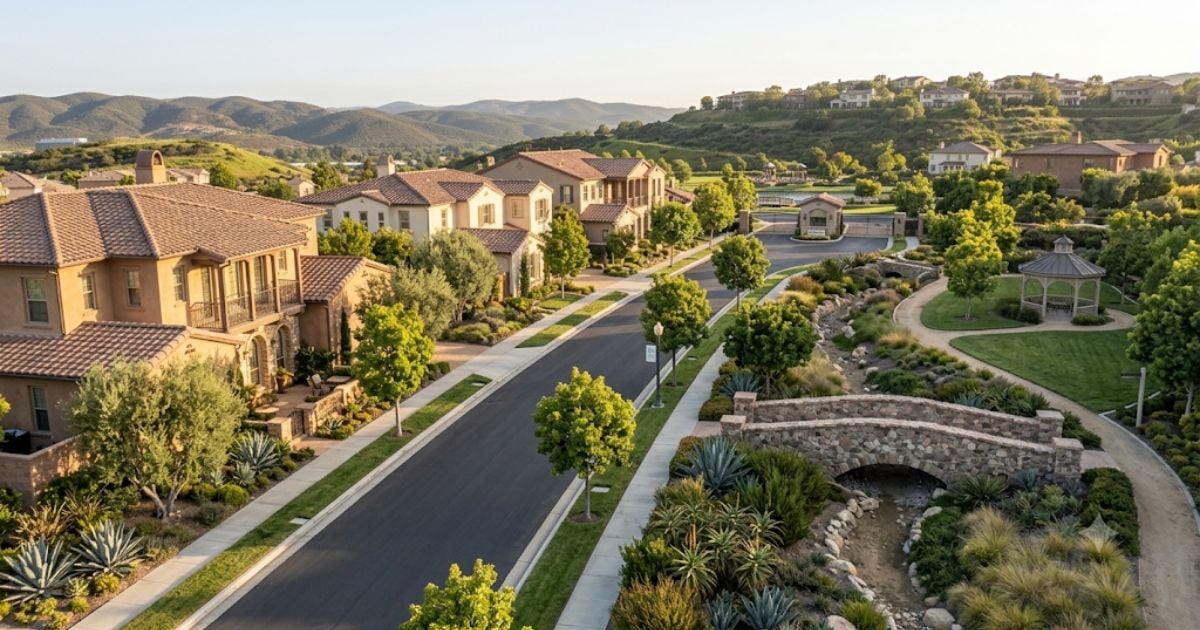
Mediterranean, Tuscan, Spanish, and California Ranch are the styles you'll see most often. Contemporary and California modern designs run through the newer tracts as well. French and Craftsman appear occasionally, though they're not common. Newer developments - Orchard Hills and Portola Springs specifically - market Spanish, Tuscan, French provincial, and Monterey-style homes to buyers looking for something with a bit more distinction.
Lot Sizes Across Different Villages
Lot size in Irvine depends entirely on product type and village. Condos and townhomes have compact footprints. Standard single-family lots generally run from 5,000 to over 8,000 square feet, though there's enough variation across the city that no single average applies cleanly.
If acreage matters to you, look at the premium estate areas. Shady Canyon and Hidden Canyon have lots reaching well over 15,000 square feet - and those properties don't sit on the market long.
Geography, Commutes, and Local Amenities
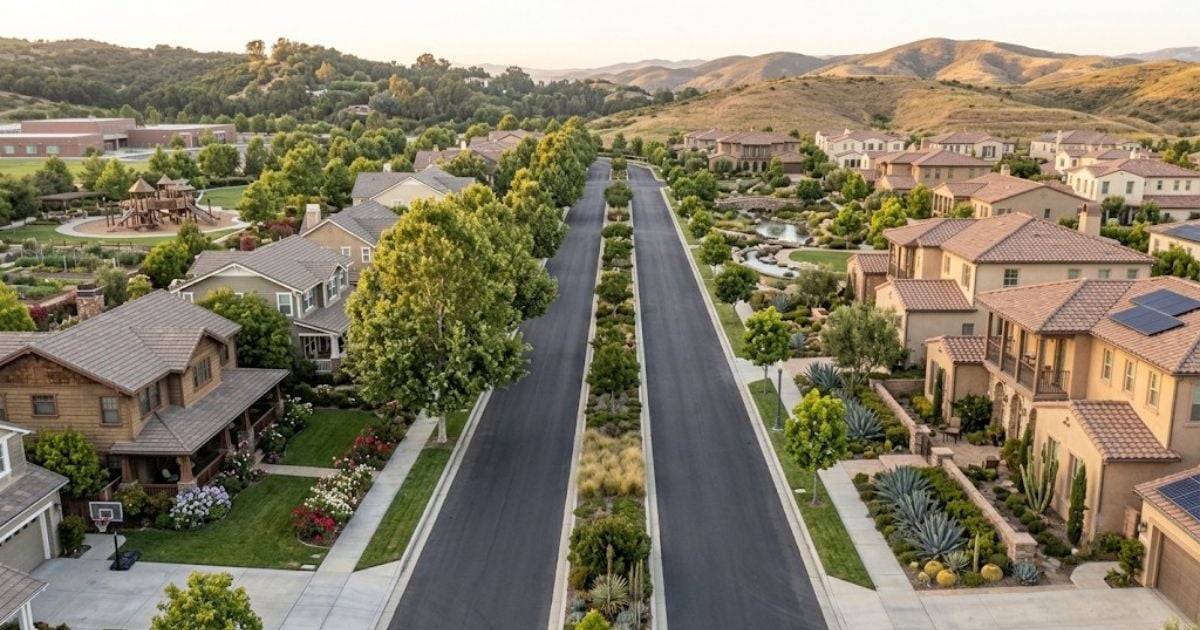
Irvine sits inland from the ocean, with the San Joaquin Hills between the city and the coast. San Diego Creek drains through the area, and rolling hills and canyons define the terrain. It reads differently than central Los Angeles, both visually and functionally. The master-planned layout connects residential villages to commercial centers, parks, and major transit routes in a way that's deliberate rather than evolved.
Parks and Recreation Access
The Great Park Neighborhoods area is the city's largest recreational hub. It includes Great Park Ice & FivePoint Arena, the Great Park Balloon & Carousel, and Wild Rivers Waterpark. Villages like Baker Ranch and Portola Springs draw buyers specifically because of proximity to these amenities - worth keeping in mind if that kind of access matters to your household.
Daily Drive Times and Routes
The average commute for an Irvine resident is 24.7 minutes, and most people drive alone. Owning a car is simply standard here - the city's layout doesn't make errands walkable in the way parts of Los Angeles can be.
One number to sit with: that 24.7-minute average reflects local travel within Orange County. If your job is in downtown Los Angeles, you're crossing county lines through some of the region's heaviest traffic. Map your actual commute before you decide the drive is manageable.
Preparing to Buy in Orange County
With a median sale price around $1.54 million and homes moving in about 48 days, Irvine isn't a market where you can afford to be slow. Get your financing in order early. Understand the village-specific pricing - and the association rules that come with each one, because they vary.
Choosing between Irvine and Los Angeles ultimately means choosing a lifestyle format. Structured, amenity-rich villages with consistent architecture on one side; historical diversity and urban density on the other. Neither is wrong. Pull the local tax rates, map your commute, and be honest about which daily experience you'd actually want a year from now.
Frequently Asked Questions
What can I expect to get for a $1.5 million housing budget in Irvine versus Los Angeles?
A $1.5 million budget typically secures a standard master-planned property or premium townhome in Irvine, where association guidelines maintain neighborhood consistency. Taking that same budget to Los Angeles trades structured village amenities for older, architecturally diverse properties, though the lack of master planning means carrying costs and property conditions vary block by block.
Is it realistic to buy a home in Irvine if I commute to downtown Los Angeles for work?
Map the route during your actual morning and evening travel windows before making an offer. While local Orange County trips average under 25 minutes, the daily drive into downtown Los Angeles crosses major regional bottlenecks that drastically alter your daily schedule.
Do single-family homes appreciate faster in Irvine or Los Angeles?
Market cooling affects both sides of the county line differently. Irvine's structured villages tend to hold a consistent baseline value, while Los Angeles neighborhoods experience sharper swings in both directions depending on hyper-local demand.
Are bidding wars currently more competitive for buyers in Irvine or Los Angeles?
Review the specific association data before assuming a property will spark a bidding war. While citywide metrics show a stabilized market, premium estate areas like Shady Canyon move much faster than standard condo inventory, requiring more aggressive negotiation tactics.