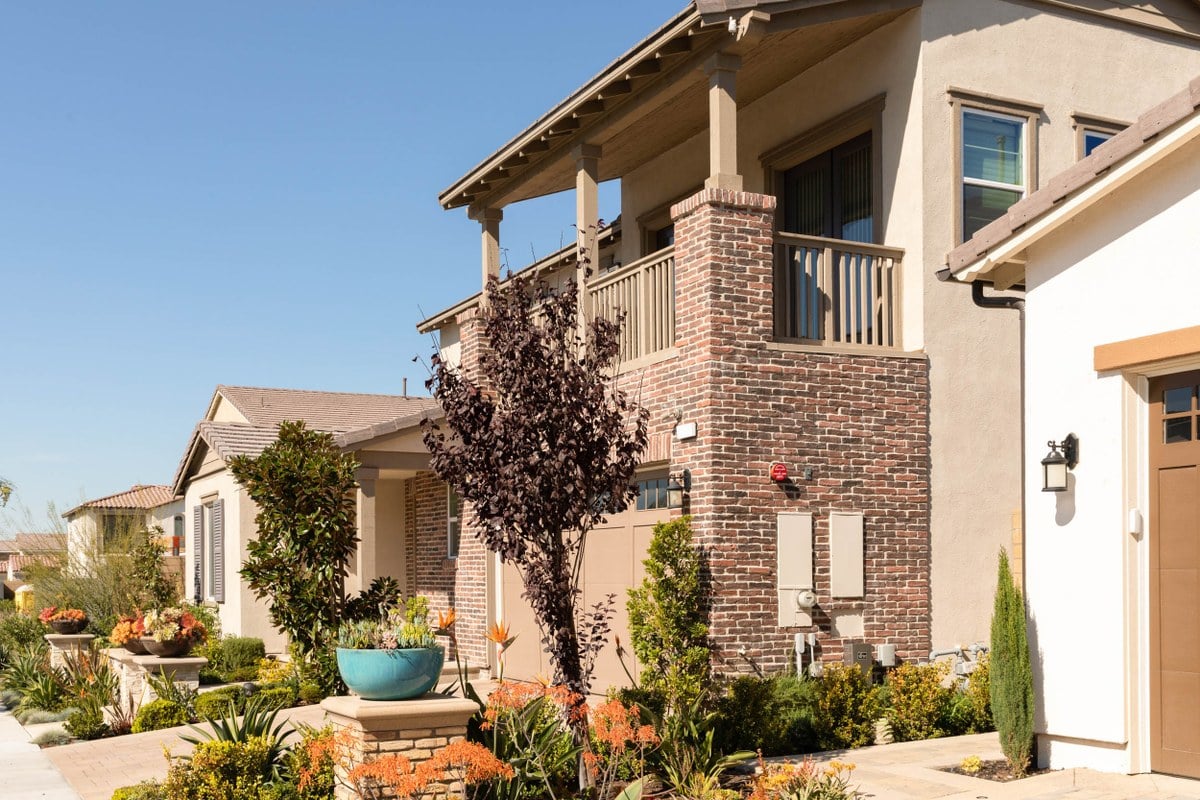
When families ask whether Irvine is better than other Orange County cities for families, the answer isn't found in marketing copy. It's in the data. Orange County sells itself as one big family-friendly destination, and technically that holds. But families who actually sit down with the numbers keep landing in Irvine. That's not a coincidence. This article runs the comparison across five factors that matter most to families: schools, safety, parks, home prices, and commute access. Data pulls from WalletHub, Niche, the California Department of Justice, and city park records, so the conclusions here are measurable, not anecdotal.
The stakes for getting this decision right are significant. School district boundaries, crime profiles, and daily commute logistics all collapse into one six- or seven-figure purchase. Choosing the wrong city on the wrong data doesn't just affect your lifestyle; it affects your resale position five years later. Here's the honest, city-by-city breakdown.
Is Irvine better than other Orange County cities for families? Start with schools
Irvine Unified School District holds an A+ on Niche with 71% math proficiency and 75% reading proficiency across the entire district. That last part matters more than most families initially realize. Many districts have one outstanding school that anchors their reputation while the rest of the campuses underperform. IUSD's advantage is consistency from the bottom up, not just the top down.
What IUSD delivers across every school, not just the top ones
The headline schools are well-known: University High ranks 48th in California, Northwood High comes in at 51st, and Portola sits at 55th. The more telling number is what Irvine's mid-tier schools score compared to the top-tier schools in neighboring districts. Even Irvine High (#114 CA) and Woodbridge (#123 CA) outperform many competing districts' flagship campuses on proficiency scores. The preceding data makes the case on its own. County education coverage also notes that multiple Orange County high schools placed on national lists in recent rankings, see the Orange County high schools rank among the nation's best coverage for context.
Contrast that with Anaheim Union High School District, which is home to Oxford Academy, ranked 4th in California. Oxford is genuinely exceptional. But Oxford Academy is a magnet school with selective admission, and the rest of Anaheim Union's campuses carry inconsistent ratings. Families who don't secure placement at Oxford don't get Oxford's outcomes. In Irvine, the floor is higher across the board.
How Tustin, Costa Mesa, and Lake Forest districts stack up
Tustin Unified has some genuinely strong individual schools, particularly on the Tustin Legacy side of the district where newer campuses tend to post higher ratings. Newport-Mesa Unified covers a wide range of performance levels depending on which part of the district a property falls in. Neither district matches IUSD's floor-level consistency on state test scores or Niche academic grades.
One practical point families often miss: school boundaries don't follow city lines cleanly. A home in one city can fall within a neighboring district's attendance zone, and vice versa. Before you fall in love with a property, check the specific address against district boundaries. City-level comparisons are useful for shortlisting; address-level research is what you need before making an offer.
Safety rankings: where Irvine stands among these OC cities
Irvine has held the lowest per capita violent crime rate among U.S. cities over 100,000 population for 18 consecutive years. To put that in context, California's statewide violent crime rate sits at 481 per 100,000 residents, and Orange County as a region posts 338 per 100,000, already the lowest regional rate in the state. Irvine operates well below both of those numbers. WalletHub ranks Irvine with the second-lowest violent crime rate in the country and the 15th-lowest property crime rate nationally.
Irvine's 18-year safety record and what drives it
The master-planned layout of the city is a structural contributor, not just a cultural one. Irvine was designed with separated land uses, dedicated pedestrian infrastructure, and consistent community policing from the start. Those design choices have produced a safety record that's held for 18 consecutive years. For families, this translates into kids walking to school, parents running evening errands without concern, and a low-stress daily environment that's harder to quantify but easy to feel once you live there.
This isn't a subjective "it feels safe" claim. The 18-year violent crime track record and the 15th-lowest property crime rate nationally hold up under scrutiny. When WalletHub ran its family-ranking study across 182 U.S. cities, Irvine placed third overall, with safety as one of its strongest individual category scores. For statewide comparisons and raw crime-rate figures, see the crime rate by state resource.
Crime profiles in Anaheim, Costa Mesa, and Lake Forest
Anaheim presents two very different profiles depending on which part of the city you're in. The urban core carries a higher crime load than Anaheim Hills, which trends quieter and borders more suburban communities. Anaheim's reported violent crime rate from 2024 FBI data lands around 27.29 per 100,000 residents, which is substantially higher than what Irvine posts. Costa Mesa sits in the middle range for Orange County, with no dramatic crime concentration but also no statistical claim to match Irvine's documented numbers. Lake Forest trends toward the quieter end of the county spectrum without approaching Irvine's tier.
The honest takeaway: Orange County as a whole is safer than most of California. You're not choosing between safe and unsafe when you compare these cities. You're choosing between degrees of safety, and Irvine holds the top position by a measurable margin.
Parks, playgrounds, and family amenities by the numbers
Irvine has 306 parks covering 37% of its total land area. Its ParkScore of 84.1 in 2026 ranks it second nationally, just 1.2 points behind Washington, D.C. Ninety-four percent of Irvine residents live within a 10-minute walk of a park. For families with young children, that density changes the texture of daily life in ways that don't show up in school rankings but matter enormously to parents.
Why Irvine's park infrastructure is nationally ranked
220 playgrounds, 25 recreation centers, 44 acres of parkland per 1,000 residents, and $697 per capita invested in parks annually. That's what Irvine's park system delivers. The Orange County average distance to the nearest park is 645 steps. In Irvine, that number drops to 172 steps. The gap isn't marginal; it's structural, built into the city's original master plan and maintained through consistent municipal investment. Local coverage highlights Irvine's high national park ranking, see the report on Irvine parks ranked in the top 10.
Anaheim has 68 parks covering over 800 acres across a city with a much larger population, which dilutes the per-resident benefit significantly. No comparable data for Tustin, Costa Mesa, or Lake Forest approaches Irvine's density metrics at the neighborhood level. The gap between Irvine and its neighbors on park access per resident isn't a rounding error.
What other OC cities offer for outdoor families
Anaheim, Costa Mesa, and Lake Forest each offer access to regional reserves, trails, and in some cases proximity to beaches. Those are real assets that Irvine doesn't replicate inside its own boundaries. Families who prioritize easy access to the coast or regional wilderness may find those cities offer a different but legitimate outdoor lifestyle. The distinction is that Irvine's park advantage is hyper-local: a playground within a few blocks of your front door, every day of the week, within walking distance for a five-year-old. Other OC cities rely more on regional infrastructure that requires a car trip to access.
On a practical note, families moving into Irvine often report that "the park within walking distance gets used more than expected." For a focused list of neighborhood parks that local families actually use, see Moving to Irvine? 12 Parks Local Families Actually Use.
Home prices and the real cost of choosing Irvine
Irvine's median home price sits at approximately $1.52 million, which is 314% above the national median. For families budgeting below $1.1 million, Irvine is simply not in the equation. That's a real constraint that deserves a direct answer, not a workaround. See current market snapshots for more detail on the Irvine housing market.
What comparable budgets buy in Anaheim, Tustin, Costa Mesa, and Lake Forest
Anaheim's median home price ranges from roughly $900,000 to $1.07 million depending on the area, with Anaheim Hills commanding a premium within the city. Tustin's median currently sits around $1.25 million with strong year-over-year appreciation of 8 to 13% depending on the data source. Lake Forest offers a planned-community feel at a lower entry point than Irvine, which makes it a legitimate alternative for families who want master-planned infrastructure without Irvine's full price premium. For budgets in the $900,000 to $1.1 million range, these cities deserve a real comparison, not a dismissal.
How to think about the Irvine price premium long-term
Irvine's demand profile is structurally different from most OC cities. Relocating professionals, international buyers, and families chasing the school district create a durable demand floor that limits downside risk in ways that other markets don't replicate as reliably. This isn't an argument to overpay or stretch a budget uncomfortably. It's an argument that Irvine's price premium comes with a documented stability track record. The resale picture matters as much as the purchase price, and Irvine's consistent demand from multiple buyer segments supports resale values in ways worth factoring into the total cost calculation.
Commute access and location within Orange County
Irvine sits at the intersection of I-5, I-405, and SR-55, giving it the best freeway convergence of any suburban city in the county. John Wayne Airport operates within city limits, which simplifies business travel logistics and makes visiting family a shorter drive from home. The Irvine Spectrum employment hub means a meaningful share of residents work within the city, keeping average commute times well below regional norms for dual-income households.
Irvine's central position in the OC job market
Major employers concentrated in and around Irvine include tech firms at the Irvine Spectrum, UC Irvine, Hoag Health facilities, and a significant concentration of financial services companies along the 405 corridor. For a household where both partners work, keeping both commutes under 30 minutes from Irvine is achievable across a broader geographic range of employers than from cities further south or east. That commute compression matters especially for families managing school pickup logistics alongside work schedules.
How Anaheim, Tustin, Costa Mesa, and Lake Forest compare for daily commutes
Anaheim provides strong access to LA County via I-5, which makes it a better option for families with one partner working north of the county line. Costa Mesa connects efficiently to coastal employment and the 405. Tustin adds roughly 15 to 25 minutes to most Irvine Spectrum commutes. Lake Forest, based on current estimates, adds 14 to 30 minutes depending on traffic and destination within the Irvine corridor. None of these cities have the freeway convergence that Irvine does, which becomes a daily operational factor when school pickups run at 3 p.m. and traffic on the 405 peaks at 4:30.
Which city is actually the right fit for your family?
So, is Irvine better than other Orange County cities for families? On schools, safety, parks, and commute access, Irvine leads every measurable comparison. The real trade-off is cost, and that trade-off is significant enough to legitimately redirect some families toward Anaheim Hills, Tustin, or Lake Forest depending on their budget ceiling. Those aren't consolation prizes; they're legitimate options with real strengths in safety and planned-community infrastructure. If schools and safety rank above cost flexibility, the data case for Irvine is essentially closed.
What families consistently say after they choose Irvine
Regina Chen, an Irvine-based realtor with 67+ closed sales across Orange County, hears a consistent pattern from families who initially hesitated on Irvine's price premium. Six months after moving in, the school district consistency removes a layer of annual anxiety that families didn't fully anticipate before the purchase. The park within walking distance gets used more than expected. Those aren't marketing points; they're field-level observations from families who ran this same comparison from the inside.
For families relocating from outside California, that kind of ground-level pattern recognition matters more than general data. Someone who has worked this market for over a decade across dozens of transactions knows which neighborhoods actually deliver on paper ratings and which ones don't. That's a different kind of intelligence than any ranking system can provide. If you're moving from Seattle specifically, see the practical breakdown in Move From Seattle to Irvine: A Real Cost & Lifestyle Breakdown for High-Income Families.
Questions to ask before committing to a city
- Which school district and specific attendance zone does this exact property address fall within? City boundaries and school boundaries are not the same line.
- If one partner's job changes or shifts location, how does the commute math recalculate from this address?
- What does the five-year resale picture look like for this neighborhood based on recent comparable sales, not just city-level trends?
- What amenities are within walking distance, and does that match how your family actually lives day-to-day versus how you imagine you'll live?
The bottom line: is Irvine better than other Orange County cities for families?
When the data is laid out city by city, Irvine's case for being the strongest Orange County option for families holds up across every category that can be measured: school district consistency, 18 consecutive years of the lowest violent crime rate among major U.S. cities, a nationally ranked park system with 44 acres of parkland per 1,000 residents, and the best freeway convergence in the county. The real caveat is cost, and that caveat is significant enough to legitimately redirect some families toward Anaheim Hills, Tustin, or Lake Forest depending on their budget ceiling.
The right next step isn't committing to a city from a ranking article. It's shortlisting two or three cities based on your actual budget, visiting neighborhoods in person at different times of day, and running school boundary checks at the specific address level before making any final call. General data gets you to the right zip code. Address-level research closes the decision correctly. For a deeper, practical resource on relocation planning in this market, see the Irvine Relocation Guide for Bay Area & Seattle Families.
If you're working through this comparison in real time, particularly if you're relocating from outside California and need someone who knows these neighborhoods block by block rather than by headline, Regina Chen is available to walk through the specifics with you. With 67+ closed sales ranging from $405K to $3.1M across Irvine and Orange County, the data she works with is local, current, and tied to actual transaction outcomes rather than national rankings. Reach out directly to start a conversation about which city and neighborhood fits your family's priorities. Our guide to buying a family home in Irvine covers the mechanics once you have picked the city.