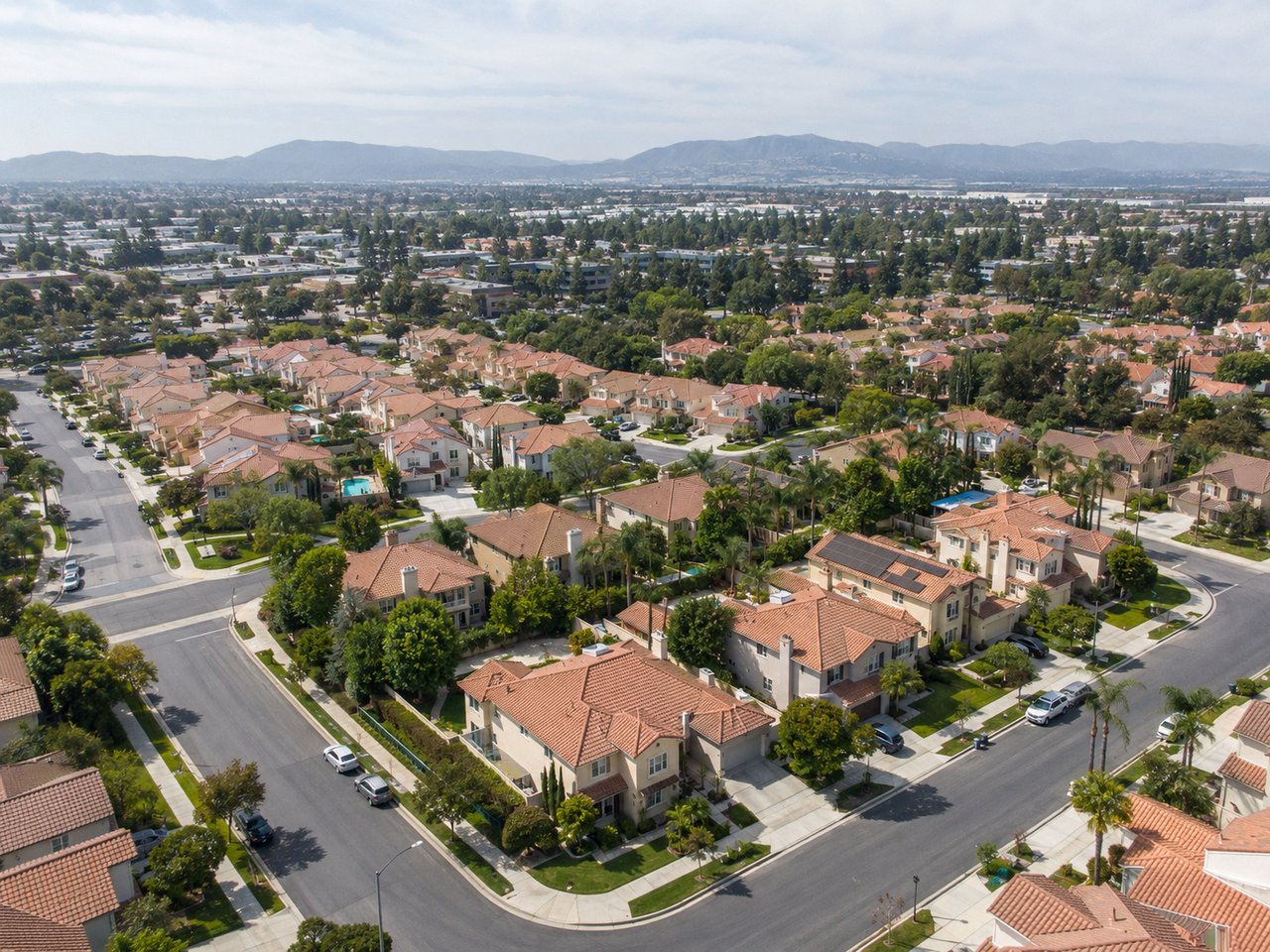
Is buying a rental property in Irvine CA worth it in 2026? That question deserves a straight answer, not a lifestyle pitch. Irvine has a reputation that precedes itself: top-ranked schools, consistently low crime rates, proximity to major biotech and tech employers, and a master-planned aesthetic that suburban California has spent decades trying to replicate. That reputation makes it easy to assume that buying a rental property here is a safe, smart move. It is not automatically either of those things.
The honest truth is that Irvine's investment math is more complicated than its lifestyle rankings suggest. Entry prices sit north of $1.5 million, investor mortgage rates remain stubbornly elevated (conventional investment loans were still running 7.1, 7.6% as of mid-2026), and gross rental yields are among the tightest in Southern California. At the same time, vacancy rates hover near 4%, tenant quality is strong relative to most comparable California markets, and the city's structural fundamentals show no signs of deteriorating. Regina Chen, an Irvine-based realtor with 67+ closed transactions across the Orange County market, puts it plainly: Irvine is a market where you need to know exactly what game you are playing before you commit capital.
This article lays out the actual 2026 numbers on prices, rents, cap rates, financing, and the regulatory changes that quietly eat into returns. By the time you finish reading, you will have enough data to determine whether buying a rental property in Irvine CA in 2026 aligns with your investment thesis, or belongs on a different list entirely.
Is Buying a Rental Property in Irvine CA Worth It in 2026? Here's What the Market Shows
How home prices have shifted heading into 2026
Irvine's median home price currently sits around $1.57 million, a modest dip of roughly 0.4% to 1.6% year-over-year depending on the data source. This follows a strong 2025 showing that saw prices climb approximately 5.4%. The current softening is not a crash; it is a recalibration from pandemic-era highs toward conditions that are more historically normal for a supply-constrained coastal market.
For investors, the distinction matters. If your thesis depends on near-term appreciation, the current plateau is a warning sign worth taking seriously. If you are operating on a 7, 10 year horizon, the same data looks far less alarming. Irvine's average home value increased roughly 83% between March 2020 and October 2024. That trajectory does not repeat every cycle, but it does reflect the city's structural desirability over time.
Current rent levels by unit type
As of mid-2026, average monthly rents in Irvine run approximately $2,960 for a one-bedroom, $3,623 for a two-bedroom, and $4,443 for a three-bedroom unit (Apartments.com rent market trends for Irvine, June 2026). These figures reflect a renter base that includes UC Irvine students, biotech and tech employees, and professional families willing to pay a school-district premium to stay within the Irvine Unified footprint. That demand profile is a key reason Irvine's rents hold even when price appreciation softens.
The rental demand story in Irvine is structurally stable, even if it is not explosive. Rent growth has not outpaced price growth in recent years, which is the core reason yields look thin. Occupancy consistency and lower turnover costs are genuine market advantages that a gross yield calculation cannot capture on its own.
Vacancy dynamics and what keeps demand sticky
Irvine's vacancy rate sits near 4%, meaningfully below the national benchmark of approximately 6.6%. Orange County more broadly shows even tighter supply conditions, with rental inventory running at 2.6 to 3 months. Constrained new supply combined with consistent in-migration from other California regions keeps that vacancy floor low. Local market analysis and recent housing summaries provide additional context on these supply dynamics (Irvine CA housing market analysis).
What public data cannot tell you is neighborhood-level vacancy within specific Irvine communities. That distinction matters when you are underwriting a specific address, and it requires active transaction volume in the local market, not a dashboard pull from a national aggregator.
Irvine CA Rental Market 2026: Cap Rates, Yields, and the Real Numbers
Gross rental yields: what the numbers actually show
At a $1.6 million purchase price, a three-bedroom unit generating $4,443 per month produces approximately $53,316 in annual gross rent, a gross yield (annual rent divided by purchase price) of roughly 3.3%. For two-bedroom units at lower rent-to-price ratios, the numbers are tighter still. Compare this to the national residential rental average, where gross yields typically land closer to 5, 6% (U.S. multifamily gross yield averaged approximately 5.6% in Q1 2026 per industry benchmarks), and Irvine's position becomes clear: this is not a cash flow market.
Irvine sits firmly in the appreciation-play category. Investors who have done well here over the past decade did not win on monthly income. They won because they held appreciating assets in a market that compounds value steadily over time. For a detailed local outlook, see the Irvine real estate forecast for 2026.
Cap rates and what investors are actually accepting
Single-family cap rates in Irvine, calculated as net operating income divided by purchase price, before debt service, run 3, 4%. Small multifamily properties in Orange County stabilize closer to 4.5%, still well below the national multifamily average of 5.6%. After accounting for property taxes, insurance, HOA fees, and a vacancy and maintenance reserve, cash-on-cash returns on Irvine single-family homes likely land in the 1.5, 1.8% range for all-cash buyers. Leveraged buyers, as the financing section below illustrates, face a different picture entirely.
If monthly cash flow is your primary objective, Irvine is the wrong market. That is not a knock on the city; it is an honest read of the numbers. Investors who buy here accept compressed near-term returns in exchange for a tenant base with strong income stability, low eviction risk, and long-term appreciation in one of Southern California's most structurally sound submarkets. Knowing which side of that trade you are on before signing is what separates a strategy from a mistake.
How Irvine Stacks Up Against Other Orange County Investment Markets
Price-to-rent ratios across Orange County
Irvine's price-to-rent ratio sits around 13.5, which is actually lower than the Orange County average of 26, 28 cited across cities like Anaheim, Tustin, and Garden Grove. On paper, that makes Irvine look favorable to buy versus rent. In practice, the dynamic is more nuanced: Irvine's absolute purchase prices are so much higher that gross yields still compress even when the ratio looks reasonable.
Cities like Anaheim and Garden Grove offer gross yields in the 4, 6% range because entry prices are significantly lower. You trade appreciation potential and tenant-profile stability for better immediate cash flow. Neither path is wrong, they reflect different investment theses, and the right answer depends on your capital position, time horizon, and risk tolerance.
Why sophisticated investors still buy in Irvine despite compressed returns
The structural case for Irvine does not rest on cap rates. It rests on what the market consistently delivers over time: a renter pool dominated by dual-income professional households, low eviction rates relative to comparable California cities, highly rated school districts that sustain demand regardless of economic cycles, and a city government that has maintained infrastructure and public safety at a level that continues to attract inbound migration. Irvine real estate data over the past five-plus years shows the city outperforming most inland OC markets on both occupancy stability and rent growth.
Investors who have held Irvine properties for 10 or more years will tell you the returns look very different at exit than they did at the break-even calculation on day one. That is the bet Irvine requires you to make.
Financing an Irvine Rental Property in 2026
What mortgage rates and loan products look like for investors
Conventional investment property loans currently run 7.1, 7.6%, sitting roughly 0.5, 1.0% above primary residence rates. Investment property mortgage rate summaries explain why DSCR loans, which qualify borrowers based on the property's rental income rather than personal W-2 income, carry rates 1.5, 3.0% above primary rates and have become a common structure for investors who operate through LLCs or have complex income situations. Portfolio and commercial loan options exist for multi-property buyers, typically pricing 1, 3% above primary rates.
Down payment requirements and a real cash flow scenario
Standard investor down payments run 15, 25%. Here is what the numbers look like on a concrete deal: $1.6 million purchase price, 20% down ($320,000), a $1.28 million loan at 7.3% on a 30-year term, producing a monthly principal and interest payment of approximately $8,769. Add property taxes at 1.25% annually ($1,667 per month), insurance ($200), a modest HOA of $400, and a vacancy and maintenance reserve of roughly $355, and your total monthly carrying cost lands near $11,391. Monthly rent on a three-bedroom comes in at $4,443. That is a monthly shortfall of approximately $6,948.
Sit with that number. It does not mean the deal is wrong, it means the deal only works if you believe Irvine property values will compound meaningfully over your hold period and that you have the liquidity to carry that gap without financial strain. Build in a six-month cash reserve at minimum before you sign anything. That is the honest version of the investment case, and anyone who presents it otherwise is selling you something.
Legal Changes and Risks That Irvine Landlords Can't Ignore in 2026
New California landlord laws that took effect in 2026
Several material legislative changes hit California landlords on January 1, 2026. AB 628 requires landlords to provide and maintain working stoves and refrigerators in most residential units for leases entered, amended, or extended on or after that date. AB 414 mandates electronic security deposit returns when tenants paid rent electronically. SB 610 requires landlords to halt rent collection and facilitate debris removal during declared disaster evacuations, a provision with real financial implications in wildfire-adjacent markets. AB 747 requires full upfront disclosure of all mandatory fees in listings and leases.
Beyond those immediate changes, AB 1482's expiration in mid-2026 creates genuine regulatory uncertainty. The Tenant Protection Act's rent cap structure (5% plus local CPI, capped at 10%) will need legislative renewal or replacement. Investors who build rent escalation assumptions into 10-year pro formas should treat that ceiling as a variable, not a constant.
HOA fees, eviction scrutiny, and short-term rental restrictions
Irvine has no local rent control, which is a genuine competitive advantage over some Orange County markets. For readers wanting a focused primer, see the local overview on rent control in Irvine. However, many Irvine properties, particularly condos and townhomes in master-planned communities like Great Park, Woodbury, and Northwood, carry HOA fees that commonly run $300, $700 per month for the sub-association alone, with additional master association fees of $25, $400 on top. Research from local HOA disclosures shows condo fees can reach $900 or more in some communities. That fee load can suppress net yields by 0.5, 1.0 percentage points and must be factored into any serious pro forma.
California courts have also increased scrutiny on no-fault just-cause evictions, requiring detailed documentation and strict compliance with owner move-in provisions. Investors eyeing short-term rental strategies should note Newport Beach's strict STR ordinance as a cautionary example of where local OC regulation can go. Irvine's own zoning rules bear close review before assuming any flex-use rental strategy is viable.
How to Identify Cash-Flowing Deals in Irvine's Competitive Market
The property screening criteria that matter most for Irvine investors
Not every Irvine property performs the same, and deal selection matters enormously in a market with this much price variance. The variables that determine whether a specific property can work as an investment include: price-to-rent ratio at the unit level (not the city average), HOA fee load as a percentage of monthly rent, unit type, proximity to UCI and the major employment corridors along the 405 and Jamboree, and neighborhood-level vacancy dynamics that go well beyond city-wide averages.
On unit type specifically: two- and three-bedroom units consistently yield better relative to purchase price than high-end single-family homes in this market. Below is the short-form screening checklist that separates productive analysis from wishful underwriting:
- Target 2BR and 3BR units over luxury SFH for better relative yield
- Run HOA fees as a hard line item before analyzing any deal
- Prioritize locations within the UCI and Great Park employment corridor
- Verify actual closed rents for comparable units, not asking rents
- Build in a minimum six-month cash reserve before committing to a purchase
Working with a local expert to analyze ROI and find the right deal
Irvine's competitive market means that worthwhile deals move fast, and the data that matters most, actual closed rents for comparable units, real HOA financials, and neighborhood-level absorption trends, is not sitting on Zillow. Regina Chen works directly with investors running ROI analysis on Irvine properties, bringing 67+ closed transactions and deep neighborhood knowledge across Irvine, Tustin Legacy, and Great Park communities to the due diligence process. For a deeper local outlook, review the Irvine real estate forecast for 2026 and related local market write-ups.
Analyzing Irvine as a market and analyzing a specific Irvine address are two different exercises. The city-level picture tells you whether the market deserves your attention. The address-level picture tells you whether a specific deal deserves your capital. Before you commit to a purchase or write off the market entirely, the most productive next step is a property-specific analysis built on current local data, not aggregated estimates from someone who has never walked the comps.
So, Is Buying a Rental Property in Irvine CA Worth It in 2026?
The direct answer: yes, for investors with a 7, 10 year time horizon, sufficient liquidity to absorb a monthly negative carry, and a primary thesis built around appreciation and tenant stability rather than monthly income. No, if you need cash flow from day one, cannot handle the financing gap, or are expecting near-term appreciation to bail out thin fundamentals.
The structural case for Irvine remains intact: constrained supply, sticky demand, a strong tenant pool, and a city that has delivered long-term appreciation well above regional averages. The case against is equally clear: compressed cap rates, elevated investor mortgage rates, HOA fee exposure that compounds quickly, and a regulatory environment adding operational complexity every legislative cycle.
Is buying a rental property in Irvine CA worth it in 2026 for your specific situation? That depends on the address, not just the zip code. Regina Chen specializes in exactly this kind of property-level ROI analysis for investors across Irvine and Orange County. Reach out directly to run the numbers on a real deal, that is where the answer actually lives. If you are new to the market, start with the guide to buying an Irvine investment property and we can run the numbers together.