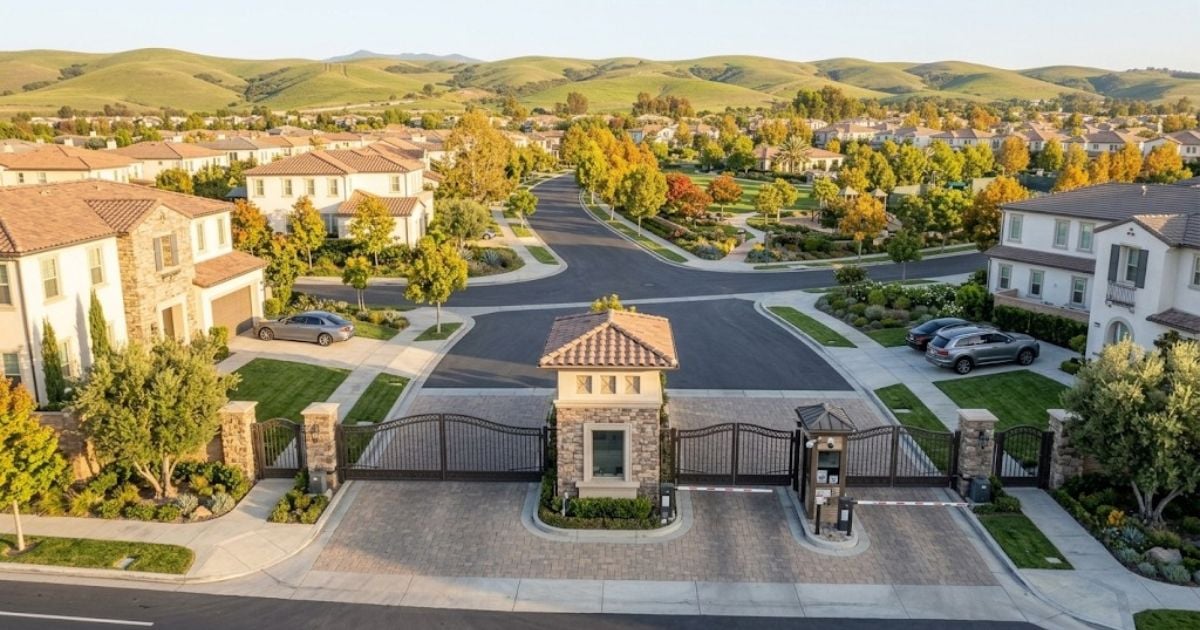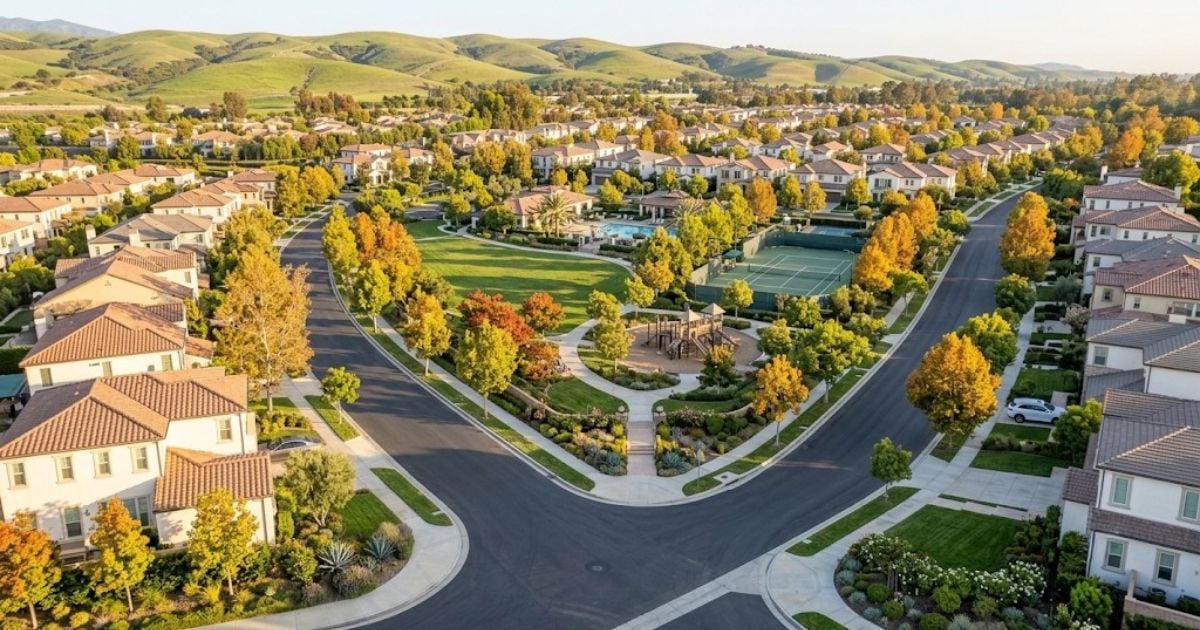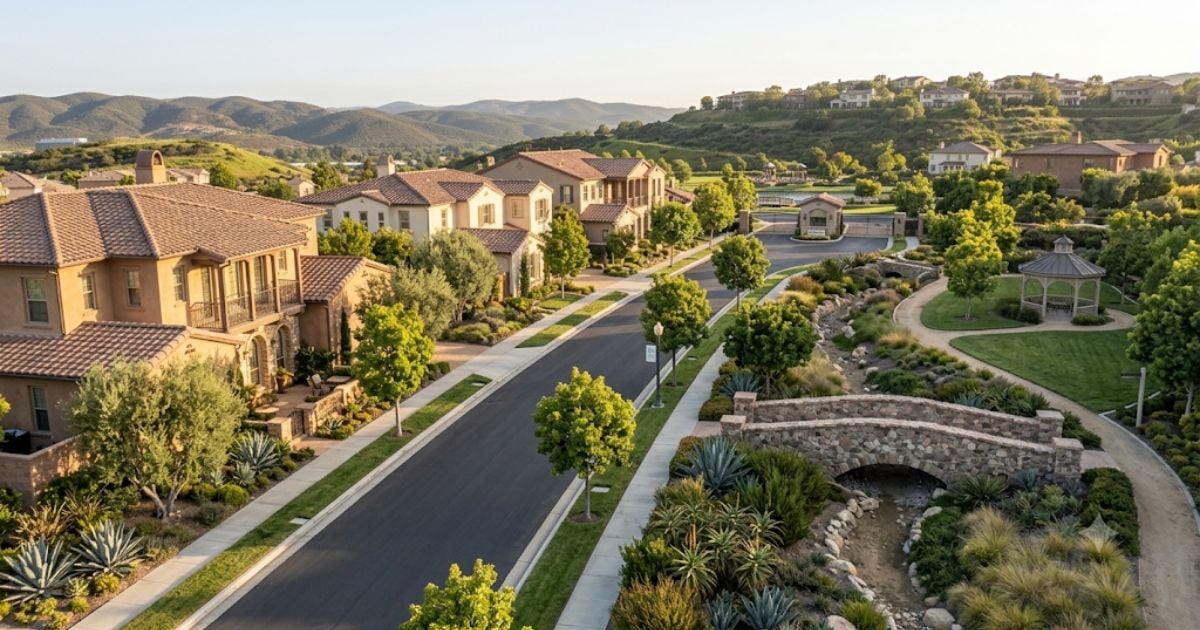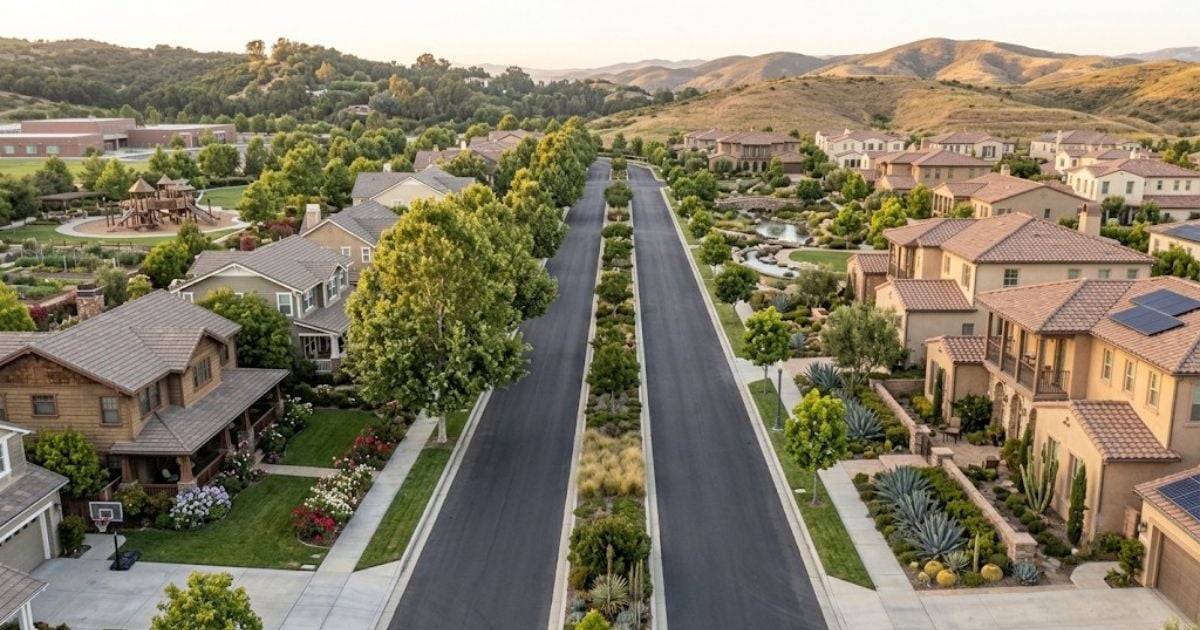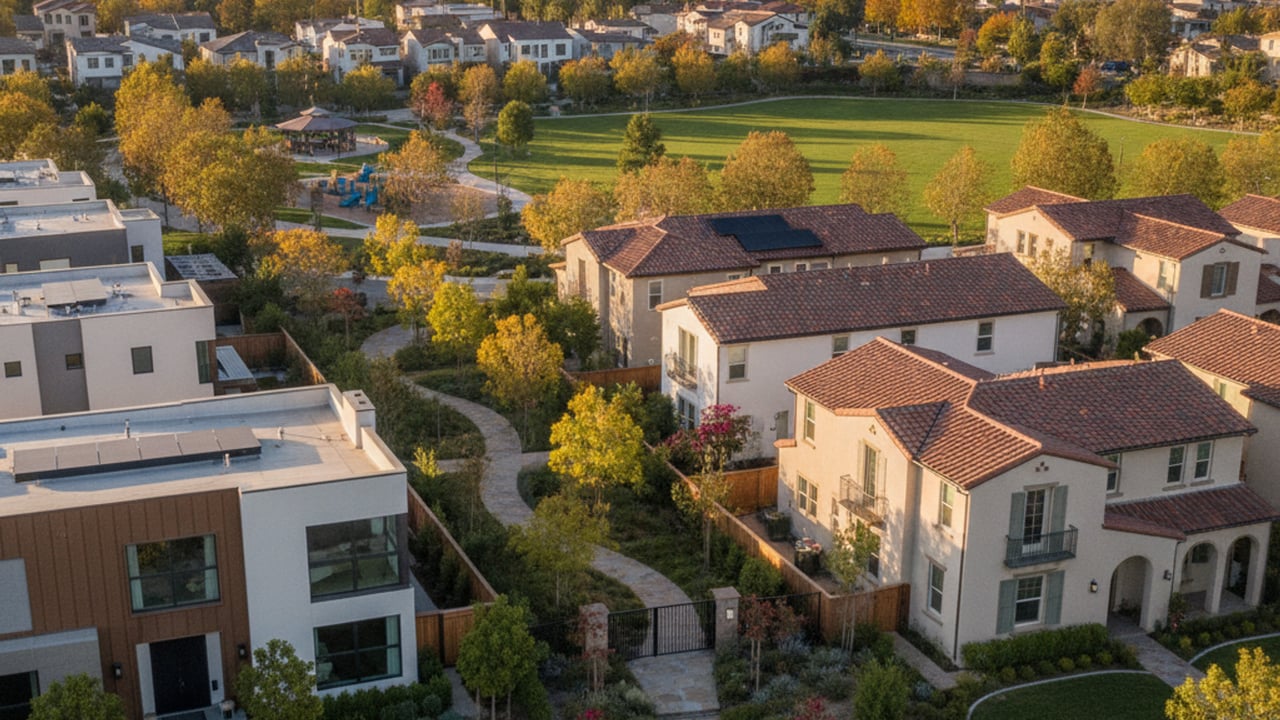
If you're looking at homes for sale in Irvine, CA, you're looking at a market with a median sale price around $1.54 million, roughly 744 active listings as of mid-2026, and properties that move in about 48 days. Those numbers make sense once you understand what this place actually is - the end product of one of the most deliberate, large-scale land planning exercises in American history.
Long before any of that, this was sheep country. Expansive agricultural fields, ranch operations, and not much else. The path from a privately held agricultural empire to a formally incorporated municipality with its own police department and zoning codes is a specific story, and it explains a lot about why the city looks the way it does - and why property values here hold the way they do.
A Look at the Area's Background
The City of Irvine was officially incorporated on December 28, 1971, under the general laws of the State of California. That date marks the formal transition from a privately managed agricultural expanse into a real municipality with its own government and civic services.
Before 1971, the Irvine Company was running the show - drafting the master plans that still shape the city's layout today. They didn't just build houses. They designed villages, each with its own commercial centers, schools, and parks built in from the start. That structure is why, decades later, the city still has a cohesive look that's hard to replicate elsewhere.
Walk through the older sections and you can still read those original plans in the streetscapes and property lines. The zoning has always kept industrial and commercial activity separated from residential areas, and that discipline hasn't loosened much.
Defining the Municipality
People ask whether Irvine is a city, a town, or just a big neighborhood inside a bigger metro. It's a fully incorporated city - its own municipal government, its own police department, its own civic services. The city limits contain dozens of individual master-planned villages, each functioning like a self-contained micro-neighborhood.
That municipal status matters practically. The city manages its own zoning and development regulations, so when you're planning a renovation, you're working against local municipal codes as well as whatever your Homeowners Association requires. Both apply, and neither waives the other.
Location and County Details
Irvine sits entirely within Orange County, California, and falls under the Los Angeles–Long Beach–Anaheim Metropolitan Statistical Area. No county-line crossings, which means property taxes, county-level services, and public records all run through Orange County exclusively.
The city's position within the county puts it roughly in the middle - connecting coastal communities to inland areas with straightforward access to major transit corridors. For buyers who need to commute, that central placement matters. And practically speaking, every transaction you close here goes through Orange County tax assessors and recording clerks. Worth knowing before you're in the middle of escrow.
Regional Commutes and Metro Ties
Being part of the Los Angeles–Long Beach–Anaheim Metropolitan Statistical Area means the city is wired into a much larger economic engine. A lot of residents commute out to Los Angeles or Long Beach. Others work locally in the city's substantial commercial sectors. The regional transit infrastructure exists specifically because that daily movement is heavy.
For real estate, this regional integration keeps demand steady. Buyers come here for the structured environment and stay connected to the broader Southern California economy - that combination doesn't go out of style.
The Story Behind the Name
The city is named for James Irvine, a sheep rancher who acquired massive tracts of local land with his business partners. The name was first formally attached to the area in 1888, when the Santa Fe Railroad station was named in his honor.
That land eventually became the Irvine Ranch - a massive agricultural operation that dominated the region for decades, managed by his family and then the Irvine Company. When suburban development started rolling and incorporation came up in 1971, keeping the name was an easy call. The ranch's identity was already embedded in the local geography, the streets, the business community. It wasn't going anywhere.
The Irvine Ranch Legacy
The original Irvine Ranch covered roughly 93,000 acres, running from the Pacific Ocean to the Santa Ana Mountains. That scale is the reason the city's master planning looks the way it does - when a single entity controls that much contiguous land, you don't have to negotiate with hundreds of separate owners to lay out a city. You just plan it.
The sheep and cattle are gone, but the ranch's presence is still readable in local street names, parks, and schools. When you buy here today, you're buying a parcel that was once part of that agricultural empire - which is either a fun historical footnote or a genuinely useful way to understand the city's unusual coherence, depending on how you look at it.
Founding and Development Timeline
The original settlement, initially called Myford, got its start in 1887 around the Santa Fe Railroad stop. The modern city began taking shape in the 1960s when the Irvine Company started drafting its master plans in earnest.
The establishment of the University of California, Irvine (UC Irvine) was the anchor event of that decade - it pulled residential villages into place around it and triggered a population boom that made formal incorporation a practical necessity. By December 1971, the blueprint for a sprawling, multi-village municipality was already well underway.
The 1980s and 1990s brought aggressive expansion - new villages rolling out in phases, each with its own architectural themes and commercial centers. Phased development meant infrastructure kept pace with population rather than scrambling to catch up afterward. Newer sections of the city continue that tradition today.
Early Settlement Days
In the late 1800s, the settlement was a functional railroad stop - basic amenities to support ranching operations, including a general store, a blacksmith, and a hotel. It stayed a quiet agricultural outpost for a long time, far removed from the urban density building up in Los Angeles.
The shift from that early stop to a modern suburb took more than half a century. The gradual pace gave the landowners room to think carefully about how commercial and residential zones would work together once large-scale development actually started.
Historic Landmarks and Local Museums
Old Town Irvine marks the site of the original 1887 settlement and was designated California Historical Landmark No. 1004 on November 11, 1991. It centers around the historic Santa Fe Railroad stop and holds some of the oldest surviving structures in the city.
It's a genuine contrast to the rest of the municipality - preserved buildings from the ranching era sitting alongside contemporary office parks and residential tracts. The city maintains these sites deliberately, and for buyers interested in understanding where all this came from, a walk through Old Town is worth the time.
The Irvine Historical Museum
The Irvine Historical Museum is located at 5 San Joaquin, operating out of the oldest surviving structure on the Irvine Ranch - an 1877 ranch house building. The Irvine Historical Society runs it, and the collections cover Indigenous life, ranching, and local agriculture in real depth.
Photographs, artifacts, and documents trace the timeline from early Native American inhabitants through the Spanish grant period and into the master-planned era. It's the primary repository for the city's historical records, and it's worth a visit if you want more than a surface-level understanding of the place you're buying into.
Notable Industries and Famous Faces
The original ranch was a serious agricultural producer - barley, lima beans, olives, asparagus, strawberries, oranges. The city today is a global hub for technology and semiconductor companies. That's a significant pivot.
The shift from agriculture to technology changed the local economy and the real estate market along with it. National and international tech firms have headquartered here, drawing a highly educated workforce, which in turn keeps housing demand active. UC Irvine reinforces that dynamic on the education side. The lima bean fields are mostly gone, but the economic output of the modern city operates on a different scale entirely.
Famous Names from the Area
Actor and comedian Will Ferrell is widely considered the city's most famous native. The area has also produced Rage Against the Machine frontman Zach de la Rocha, No Doubt guitarist Tom Dumont, actress Nasim Pedrad, and burlesque performer Dita Von Teese.
On the athletic side, swimmer Aaron Peirsol and softball star Natasha Watley both hail from the city - two Olympians, which reflects something real about the youth sports programs and facilities available here.
Frequently Asked Questions
Which Irvine villages are the oldest, and when were those original homes built?
The original master-planned villages began development in the 1960s alongside the establishment of UC Irvine. The oldest surviving residential structure in the broader area is the 1877 ranch house building at 5 San Joaquin, which now serves as the local historical museum.
Why do some older Irvine neighborhoods lack Mello-Roos taxes while newer developments have them?
The older villages built in the 1960s and 1970s predate the widespread use of Mello-Roos Community Facilities Districts. Newer sections rely on those tax districts to fund the construction of modern infrastructure, schools, and parks. Verify the tax status of any specific property with your agent - those fees affect monthly housing costs in a real way.
Are there still residential land leases in Irvine, or did the Irvine Company historically convert them all to fee simple?
The Irvine Company historically used land leases for many early residential developments, and the vast majority were later converted to fee simple ownership. That said, a few specific properties or specialized developments may still operate under leasehold agreements. Review title documents carefully before you close.
Are there any historic preservation restrictions to worry about when remodeling a 1970s home in Irvine?
Generally, no - historic preservation restrictions are typically reserved for much older sites like the 1887 structures in Old Town. Homes from the 1970s don't usually fall under those rules. You're still working against Homeowners Association architectural guidelines and city zoning codes, though. Both apply regardless.
How did the original master plan shape the HOA rules and amenities in Irvine's early villages?
Each village was designed from the beginning as a self-contained unit with its own parks, pools, and commercial centers. Homeowners Associations were established early to maintain those shared amenities and enforce consistent aesthetic standards. That framework set the template for how nearly every subsequent neighborhood in the city is managed.
How do the lot sizes and layouts of the original Irvine communities compare to newer areas like the Great Park Neighborhoods?
The older villages from the 1960s and 1970s tend to have larger individual lot sizes and more mature landscaping. Newer developments lean toward higher-density housing and large shared community amenities rather than expansive private backyards. Different trade-offs, depending on what you're looking for.